Indicative duration
One day for a foundation workshop or two days for a use-case-based governance lab.

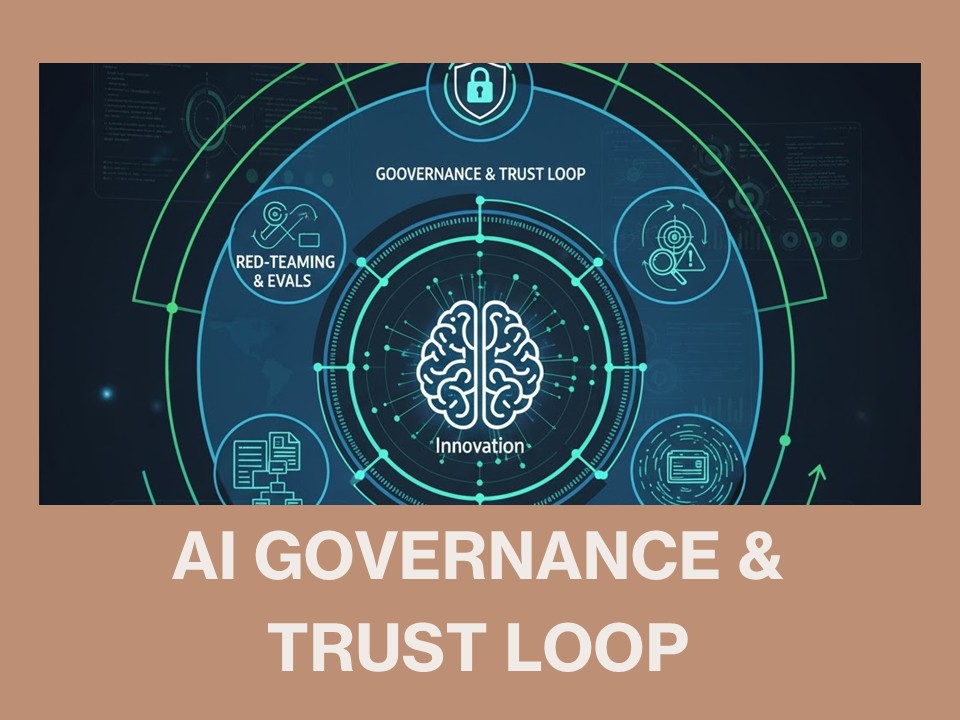
Define how delegated AI work should be owned, tested, approved, observed, changed, suspended, and improved in practice.
One day for a foundation workshop or two days for a use-case-based governance lab.
Business owners, transformation leads, risk, compliance, IT, security, and solution teams.
An agreed use case, relevant policies, named decision owners, and available solution information.
A draft control matrix, evaluation plan, approval map, or operating responsibility model.
Risk appetite, acceptable use, accountability, oversight, incident handling, and change control.
Identity, ownership, permissions, approval conditions, evaluations, traceability, and suspension.
Responsible delegation, data handling, verification, escalation, and reporting.
Participants or project sponsors leave with a draft governance artefact tied to the agreed use case. Depending on scope, this may be a control matrix, evaluation plan, approval map, operating responsibility model, or incident scenario.
A workshop develops capability and draft artefacts. It does not claim to implement production controls across an organisation.